

Introduction
In science, many claims are based on observed relationships between variables. For example, studies may find that people who drink coffee live longer, that certain diets are associated with lower cancer rates, or that students who use laptops perform worse on exams. These findings often appear persuasive and are sometimes reported in the media as if they demonstrate cause and effect.
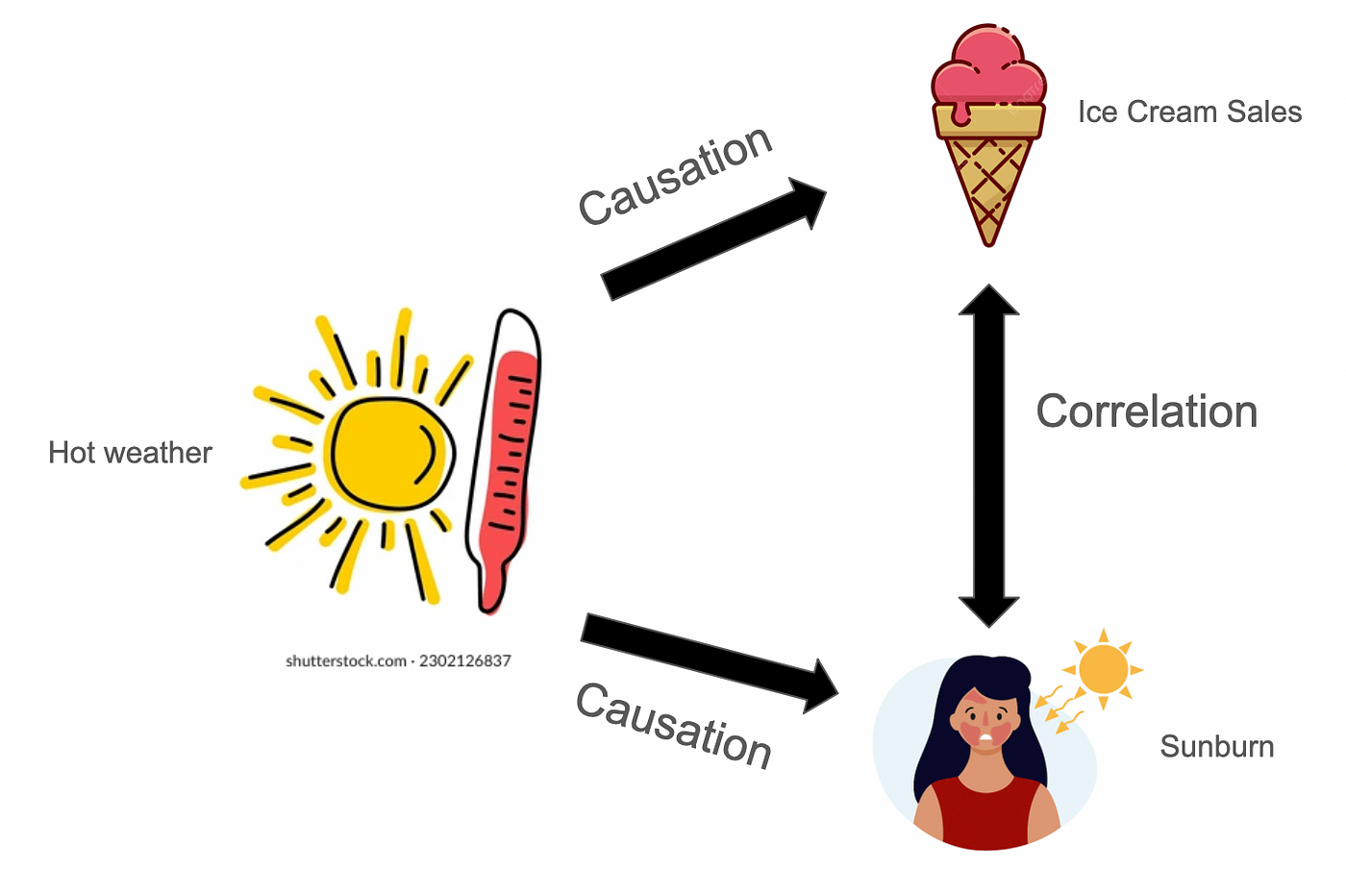
However, a fundamental principle of scientific reasoning is that correlation does not necessarily imply causation. Observing that two variables occur together does not prove that one causes the other. Understanding this distinction is essential for evaluating scientific claims, interpreting research findings, and making sound policy or health decisions.
This article examines why correlations can be misleading and how careful reasoning helps distinguish genuine causal relationships from coincidental associations.
Step 1: Identifying the Claim
A typical argument based on correlation may look like this:
Countries that consume more chocolate produce more Nobel Prize winners. Therefore, eating chocolate increases intelligence.
The central claim is that chocolate consumption causes higher intellectual achievement.
At first glance, the relationship may appear convincing because the data show a statistical association between chocolate consumption and Nobel laureates. However, identifying the claim is only the first step in evaluating its validity.
Step 2: Evaluating the Evidence
The evidence in this case consists of an observed correlation between two variables:
- national chocolate consumption
- number of Nobel Prize winners
Correlational studies can reveal interesting patterns and generate hypotheses, but they do not establish causal relationships. Unlike controlled experiments, observational data do not isolate variables or rule out alternative explanations.
Without experimental control, the observed relationship could arise from several other factors.
Step 3: Considering Alternative Explanations
A key question in evaluating any correlation is whether confounding variables may explain the association.
In the chocolate example, several plausible confounders exist:
- Economic wealth: Wealthier countries can afford more chocolate and also invest more heavily in education and research.
- Educational infrastructure: Nations with strong universities and research institutions are more likely to produce Nobel Prize winners.
- Population size and research funding: Countries with larger research communities may naturally produce more scientific breakthroughs.
These factors could explain both higher chocolate consumption and greater numbers of Nobel laureates without any causal connection between the two.
This illustrates how correlations often arise because two variables share a common underlying cause.
Step 4: Recognizing Common Reasoning Errors
Misinterpreting correlations often involves several well-known reasoning errors.
Correlation vs. Causation
The most obvious mistake is assuming that because two things occur together, one must cause the other. In reality, correlations can occur for many reasons, including coincidence or shared underlying causes.
Selection Bias
If the data include only certain types of countries—such as wealthy nations—the analysis may overlook other relevant populations where the pattern does not hold.
Overgeneralization
Even if a relationship exists within a dataset, it may not apply universally. Extending conclusions beyond the scope of the evidence can produce misleading claims.
Recognizing these errors helps prevent premature conclusions.
Step 5: Addressing Uncertainty
Scientific reasoning requires acknowledging the limits of available evidence. In the chocolate example, the correlation alone cannot determine whether:
- chocolate improves cognitive ability
- intelligence leads people to consume more chocolate
- both are influenced by wealth or cultural factors
Without controlled experiments or stronger causal evidence, the true relationship remains uncertain.
Acknowledging uncertainty does not weaken an argument. Instead, it reflects intellectual honesty and careful reasoning.
Step 6: What Stronger Evidence Would Look Like
To establish causation, stronger research designs are required.
For example, researchers might conduct:
- Randomized controlled trials, where participants are randomly assigned to consume chocolate or a control diet.
- Longitudinal studies, tracking cognitive outcomes over time while controlling for confounding variables.
- Mechanistic studies, investigating whether chocolate compounds biologically affect brain function.
Such approaches can help clarify whether a causal relationship exists.
Until then, the correlation should be interpreted cautiously.
Conclusion
Correlations often provide valuable clues in scientific research, but they do not by themselves demonstrate cause and effect. Observed relationships may arise from confounding variables, bias, or coincidence.
Careful evaluation of claims requires several steps:
- Clearly identifying the claim being made
- examining the quality and type of evidence
- considering alternative explanations
- recognizing common reasoning errors
- acknowledging uncertainty when evidence is limited
By applying these principles, researchers and readers alike can avoid misleading conclusions and develop a more accurate understanding of complex scientific questions.