

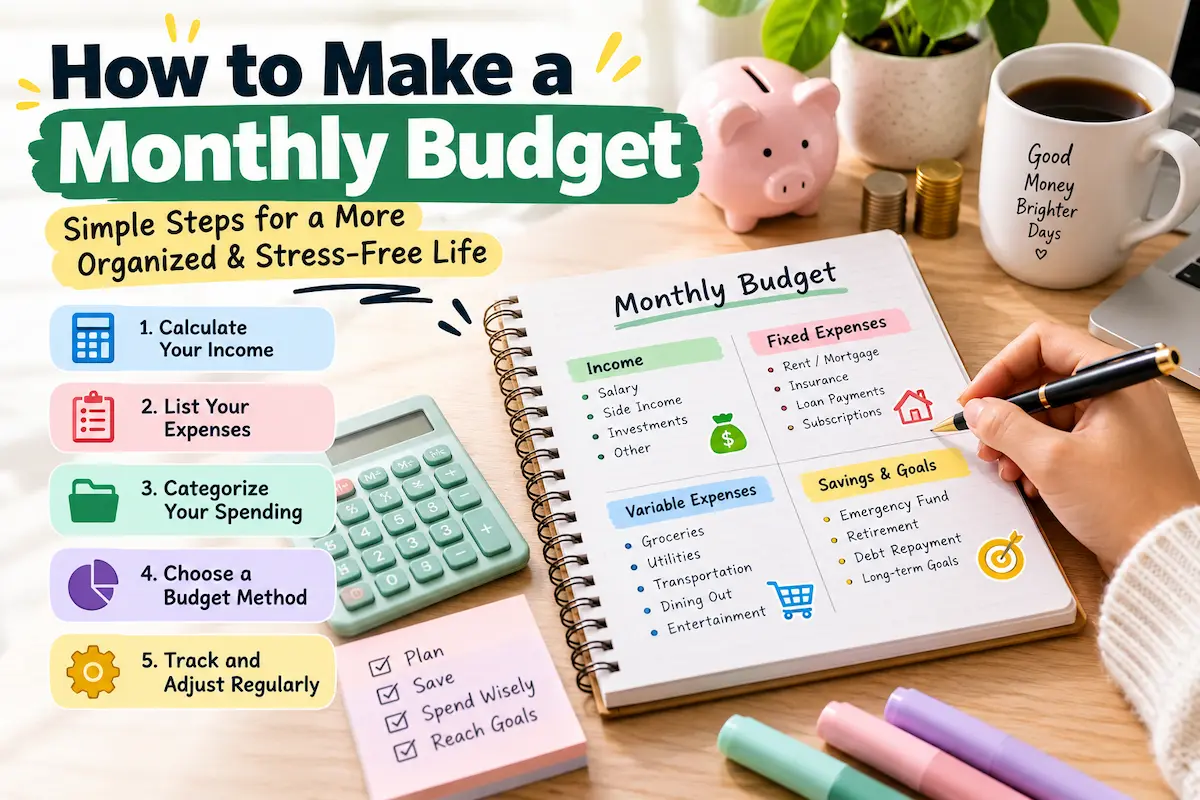
Managing personal finances often starts with good intentions, but many monthly budgets fail within the first few weeks. The reason is rarely a lack of willpower. More often, households design plans that are far too rigid, leave no room for unexpected costs, or rely on overly optimistic estimates. A budget should not serve as an exercise in financial deprivation; instead, it is a practical tool designed to give you clarity and control over where your hard-earned money goes.
Creating a realistic household budget requires an honest look at your spending habits and a system that adapts to everyday life. Whether you are managing finances on your own or coordinating a busy family home, this practical guide walks through the essential steps to build a sustainable monthly spending plan.
1. Determine Your True Take-Home Income
The foundation of any workable budget is knowing precisely how much money enters your bank account each month. Base your calculations entirely on your net income—the amount remaining after taxes, pension contributions, employment insurance, and other payroll deductions have been made.
If you receive a predictable salary, calculating your monthly baseline is straightforward. However, if your household relies on shift work, freelancing, seasonal contracts, or variable commissions, determine a conservative baseline:
- Review previous months: Look at your net earnings across the past six to twelve months to identify your lowest earning month.
- Budget from the baseline: Use that lower figure as the primary benchmark for essential monthly spending.
- Treat surplus as savings: Allocate any income earned above your baseline toward debt reduction, emergency savings, or long-term investments rather than expanding routine expenses.
2. Track and Categorize Your Actual Expenses
Many budgets fall apart because they reflect what people wish they spent rather than what they actually spend. Before drafting categories, review two to three months of recent bank statements and credit card bills to uncover your genuine spending patterns.
Organize these expenses into three distinct groups:
Fixed Costs
These are obligations that remain consistent every month. Examples include mortgage or rent payments, vehicle financing, insurance premiums, childcare fees, internet packages, and recurring subscription services. Because these numbers rarely fluctuate month-to-month, they are the simplest to plan around.
Variable Essentials
These expenses are non-negotiable for daily living, but the exact amounts vary. They include groceries, home heating, electricity, vehicle fuel, and public transit fares. When calculating these figures, account for seasonal shifts—such as higher home heating bills during colder months or elevated fuel costs during summer road trips.
Discretionary Spending
Discretionary purchases represent your lifestyle choices: dining out, entertainment, hobbies, streaming services, and new clothing. Being honest about discretionary spending prevents the common mistake of setting unrealistic targets that lead to frustration and abandoned budgets.
3. Select a Budgeting Method That Fits Your Lifestyle
There is no universal budgeting method that suits every household. The right framework is simply the one you can stick to consistently over time. Three popular approaches include:
- The Proportional Method (such as 50/30/20): Under this framework, roughly 50 percent of net income goes toward essential needs, 30 percent toward personal wants, and 20 percent toward debt repayment and future savings. This approach offers flexibility without requiring you to track every small transaction.
- Zero-Based Budgeting: With this system, every dollar of net income is assigned a specific job before the month begins—whether for rent, groceries, debt payments, or savings—so that income minus expenses equals zero. It requires regular tracking but provides maximum accountability.
- Pay-Yourself-First: Ideal for households that dislike tracking multiple categories, this method prioritizes moving a predetermined amount into savings and investments the moment paycheques arrive. The remaining balance in the chequing account is then used freely to cover bills and everyday expenses.
"A realistic budget does not eliminate discretionary enjoyment; it creates a defined space for it so that day-to-day spending happens without guilt or worry."
4. Account for Irregular and Emergency Expenses
One of the most frequent reasons household budgets derail is the arrival of predictable, yet non-monthly, bills. Vehicle registrations, dental work, home maintenance, seasonal gifts, and annual insurance premiums do not happen every month, but they are guaranteed to occur eventually.
To prevent these bills from draining your monthly cash flow or pushing you toward high-interest credit cards, create dedicated sinking funds:
- Calculate the estimated annual total for recurring irregular expenses (e.g., $1,200 annually for routine vehicle maintenance and tires).
- Divide that total by 12 (e.g., $100 per month).
- Transfer that amount automatically each month into a separate savings account reserved exclusively for that purpose.
In tandem with sinking funds, establish an emergency fund to cover true surprises, such as sudden job interruptions or urgent household repairs. Having even a modest cash cushion prevents temporary setbacks from turning into chronic debt.
5. Automate and Maintain Flexibility
A successful budget works in the background rather than demanding hours of administrative effort every weekend. Leverage your financial institution's digital tools to make consistency effortless:
- Automate bill payments: Schedule automatic payments for recurring fixed costs to avoid late fees.
- Automate savings: Set up recurring transfers to savings accounts immediately following payday.
- Conduct a monthly check-in: Spend 15 minutes at the end of each month reviewing your progress. Compare your actual spending against your targets and adjust categories where necessary.
Building Financial Stability Over Time
A realistic monthly household budget is a living document, not a rigid set of permanent rules. As household priorities shift, income changes, or inflation impacts common consumer goods, your financial plan must evolve alongside your circumstances.
Focus on incremental progress rather than perfection. By developing an honest assessment of your income, planning for the unexpected, and maintaining a framework that accommodates both your obligations and your personal interests, you can build a stable financial foundation that supports your household for years to come.